The target-state architecture
Seven planes across fourteen layers, two binding rules, and the two-estate reality every design must survive.
The whole thing, on one page
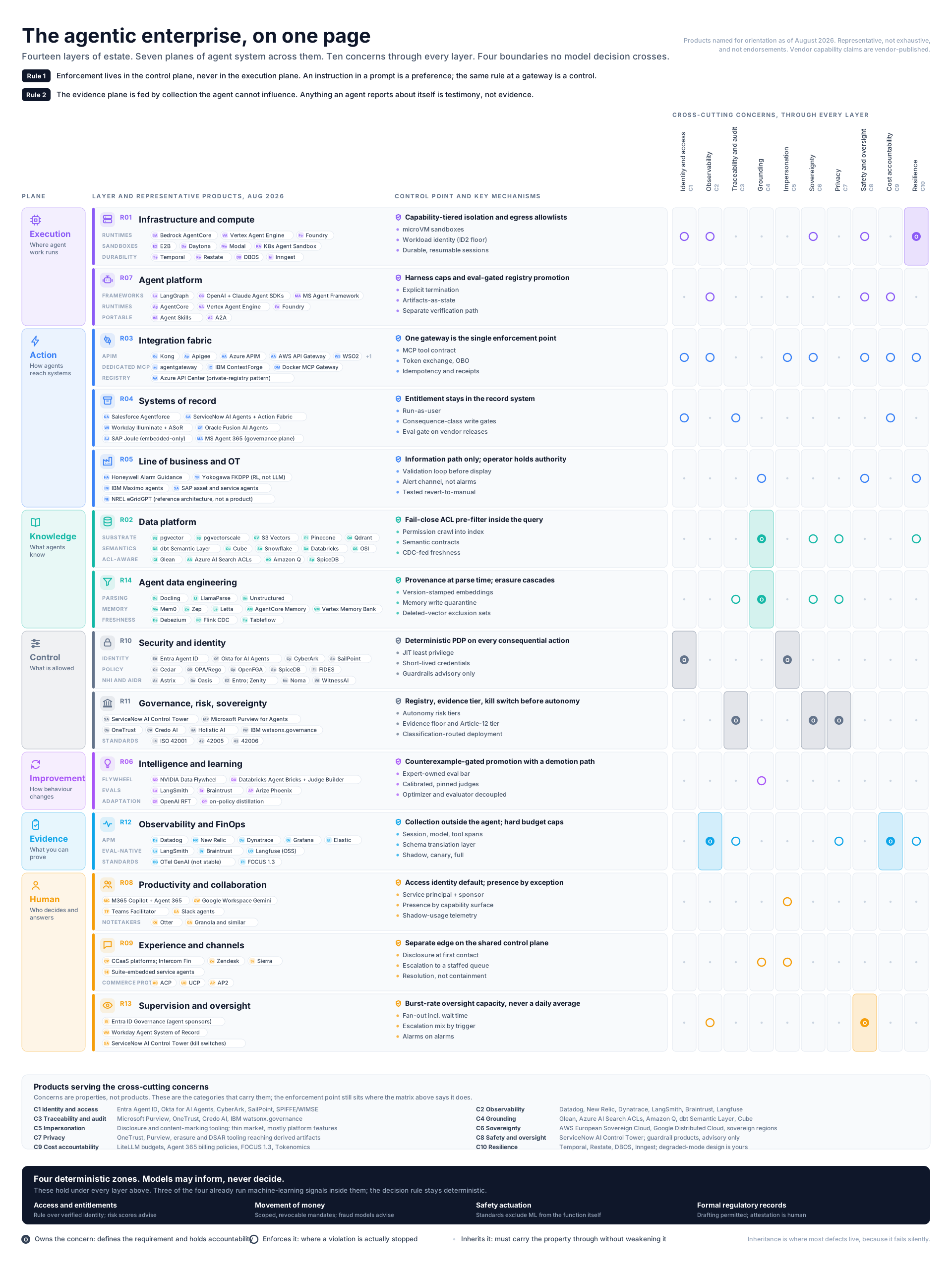
Everything below is in this diagram. It shows the fourteen layers, each with its control point, key mechanisms, and market products. It shows the seven planes that group them. It shows the ten cross-cutting concerns as columns, marking who owns and who enforces each, plus the products that serve them. Underneath sit the four deterministic zones, where a model may advise but never decide. Products are named for orientation as of August 2026; they are representative rather than exhaustive, and they are not endorsements. If you read one artifact from this guide, read this one.
Reference diagram
The agentic enterprise, on one page
The shape
In short: Agents are built across the systems you already own, with seven new groups of capability around them. Two rules hold: an agent never enforces its own rules and never keeps its own evidence.
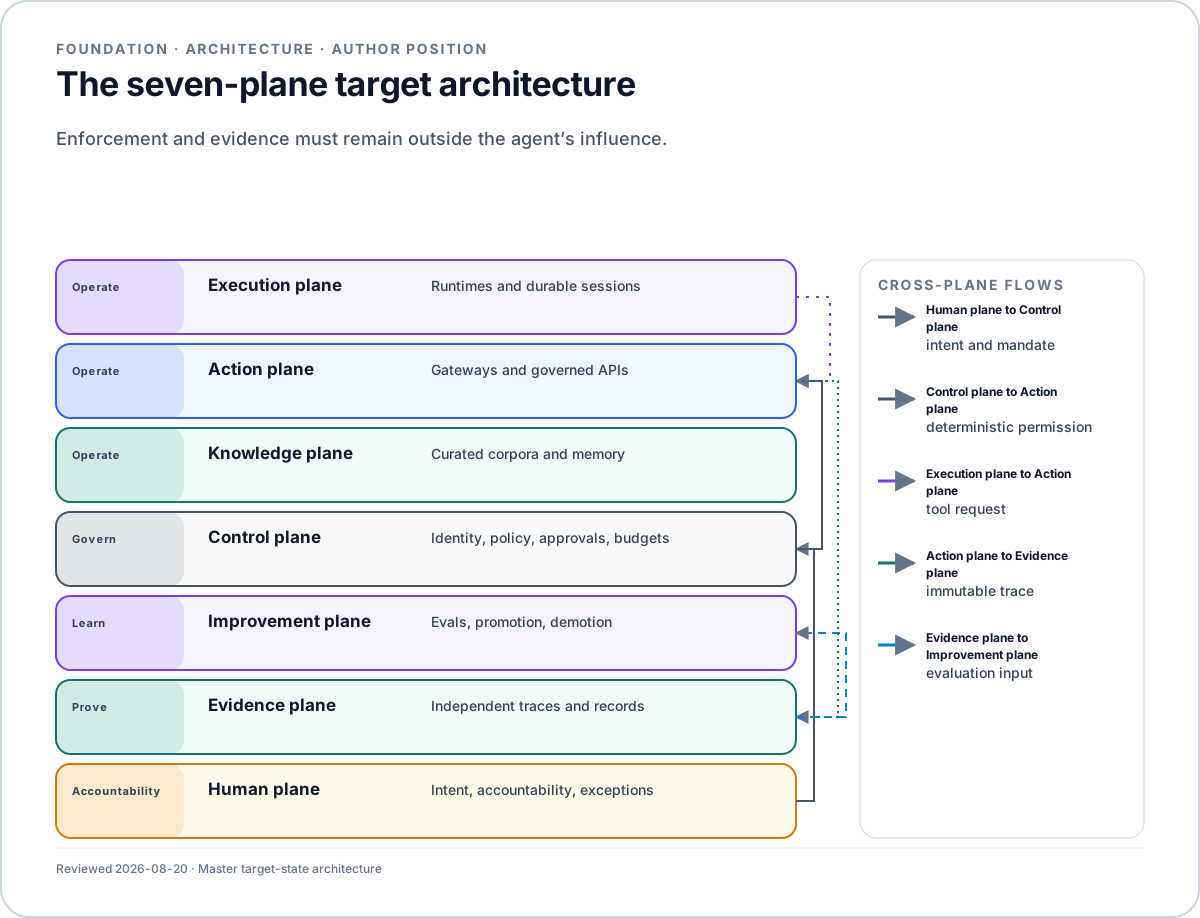
An agentic enterprise is fourteen layers of estate with a seven-plane agent system built across them. The layers are what you already own: infrastructure, data, integration, records, line-of-business systems, and the rest. The planes are what you build. There are seven. Execution is where agent work runs. Action is how agents reach your systems. Knowledge is what agents know. Control is what is allowed. Improvement is how behaviour changes. Evidence is what you can prove afterward. Human is who decides and answers for it.
foundation · architecture
The seven-plane target architecture
Enforcement and evidence must remain outside the agent’s influence.
- 01Operate
Operate
Execution plane
Runtimes and durable sessions
- 02Operate
Operate
Action plane
Gateways and governed APIs
- 03Operate
Operate
Knowledge plane
Curated corpora and memory
- 04Govern
Govern
Control plane
Identity, policy, approvals, budgets
- 05Learn
Learn
Improvement plane
Evals, promotion, demotion
- 06Prove
Prove
Evidence plane
Independent traces and records
- 07Accountability
Accountability
Human plane
Intent, accountability, exceptions
Diagram description: Seven horizontal architecture planes for execution, action, knowledge, control, improvement, evidence, and human accountability, connected by policy and trace flows. The map contains Execution plane: Runtimes and durable sessions; Action plane: Gateways and governed APIs; Knowledge plane: Curated corpora and memory; Control plane: Identity, policy, approvals, budgets; Improvement plane: Evals, promotion, demotion; Evidence plane: Independent traces and records; Human plane: Intent, accountability, exceptions. Its connections are human to control for intent and mandate; control to action for deterministic permission; execution to action for tool request; action to evidence for immutable trace; evidence to improvement for evaluation input.
Two rules bind the planes, and they are the two most often violated:
- Enforcement lives in the control plane, never in the execution plane. An instruction in a prompt is a preference. The same rule becomes a control when a gateway or a policy decision point checks it. A gateway is the single door every agent request passes through; a policy decision point is the component that says yes or no to each action. Every layer page names where its enforcement actually sits.
- The evidence plane is fed by collection the agent cannot influence. Anything an agent reports about itself is testimony, not evidence. Traces (the step-by-step log of each run), decisions, and provenance (where each piece of information came from) are collected by a separate channel the agent cannot touch.
The crosswalk
foundation · matrix
Fourteen estate layers, seven agent-system planes
Layers describe what the enterprise owns; planes describe how governed agent work operates across it.
R01 Infrastructure
- Execution:Runtime and model serving
R02 Data platform
- Knowledge:Governed source data
R03 Integration fabric
- Action:Gateway and tool path
R04 Systems of record
- Action:Authoritative action boundary
R05 LOB and OT
- Action:Operational actuation boundary
R06 Intelligence and learning
- Improvement:Evaluation and promotion
R07 Agent platform
- Execution:Agent runtime
- Control:Registry and runtime controls
R08 Productivity and collaboration
- Human:Human work surface
R09 Experience and channels
- Human:Customer and employee edge
R10 Security and identity
- Control:Identity and policy
R11 Governance, risk and sovereignty
- Control:Risk and sovereignty rules
- Evidence:Decision and consultation records
R12 Observability and FinOps
- Evidence:Independent traces and cost
R13 Operating model
- Human:Accountability and supervision
R14 Agent data engineering
- Knowledge:Curation and memory
- Improvement:Eval-data flywheel
The cells show primary contributions, not exclusive ownership. Every deployed workload uses all seven planes across the relevant estate layers.
Diagram description: Crosswalk matrix showing fourteen enduring enterprise layers down the rows and seven agent-system planes across the columns, with several layers contributing to multiple planes. The matrix crosses R01 Infrastructure, R02 Data platform, R03 Integration fabric, R04 Systems of record, R05 LOB and OT, R06 Intelligence and learning, R07 Agent platform, R08 Productivity and collaboration, R09 Experience and channels, R10 Security and identity, R11 Governance, risk and sovereignty, R12 Observability and FinOps, R13 Operating model, R14 Agent data engineering with Execution, Action, Knowledge, Control, Improvement, Evidence, Human. Annotated cells are R01 Infrastructure by Execution: Runtime and model serving; R02 Data platform by Knowledge: Governed source data; R03 Integration fabric by Action: Gateway and tool path; R04 Systems of record by Action: Authoritative action boundary; R05 LOB and OT by Action: Operational actuation boundary; R06 Intelligence and learning by Improvement: Evaluation and promotion; R07 Agent platform by Execution: Agent runtime; R07 Agent platform by Control: Registry and runtime controls; R08 Productivity and collaboration by Human: Human work surface; R09 Experience and channels by Human: Customer and employee edge; R10 Security and identity by Control: Identity and policy; R11 Governance, risk and sovereignty by Control: Risk and sovereignty rules; R11 Governance, risk and sovereignty by Evidence: Decision and consultation records; R12 Observability and FinOps by Evidence: Independent traces and cost; R13 Operating model by Human: Accountability and supervision; R14 Agent data engineering by Knowledge: Curation and memory; R14 Agent data engineering by Improvement: Eval-data flywheel. Important boundary: The cells show primary contributions, not exclusive ownership. Every deployed workload uses all seven planes across the relevant estate layers.
- Plane
- Execution
- Built primarily from
- Sandboxes, runtimes, durable sessions, model serving
- Plane
- Action
- Built primarily from
- Tool gateway, wrapped governed APIs (application programming interfaces), OT (operational technology) boundary
- Plane
- Knowledge
- Built primarily from
- Governed indexes, curation pipelines, memory tiers
- Plane
- Control
- Built primarily from
- Identity, policy decision points, registry, budgets
- Plane
- Improvement
- Built primarily from
- Evals, judges, promotion gates, staged rollout
The two-estate reality
In short: Some agents run through systems you control, where you can see and govern everything. Others run inside vendor products, where you govern only what the vendor's settings allow, so every design has to work for both.
Agent work runs in two estates, and every design must survive that fact. The metered estate flows through your own gateways. It is fully governable, budget-enforced, and traced on your terms. The licensed estate (suite copilots, agents embedded in record systems) runs on vendor control planes your gateway never sees. You can govern it only through tenant policy settings and by extracting telemetry, the activity measurements the vendor's system emits. The vendor interfaces (APIs) for doing so have documented gaps. Architectures that assume one gateway governs everything are the most common structural error at enterprise scale. A cost model that prices agent actions but not the governance plane is wrong by a variable amount. Governance is a separately priced per-user item (a SKU, or stock-keeping unit) in one vendor stack and free in another [vendor pricing].
support · comparison
Licensed and metered agent estates
One gateway cannot govern agents that run inside a vendor’s licensed control plane.
Licensed estate
- Vendor execution plane
- Tenant policy
- Telemetry extraction
- Limited gateway visibility
Metered estate
- Enterprise runtime
- Gateway enforcement
- Per-run budgets
- Full action trace
Diagram description: Two-estate architecture comparing licensed suite agents governed through tenant policy with metered agents governed through an enterprise gateway and shared evidence plane. The comparison contains 2 groups: Licensed estate, containing Vendor execution plane, Tenant policy, Telemetry extraction, Limited gateway visibility; Metered estate, containing Enterprise runtime, Gateway enforcement, Per-run budgets, Full action trace.
Three builds of the same planes
In short: Large regulated enterprises, mid-sized companies, and digital-native companies build the same seven planes in different ways. The diagram shows what each one builds, rents, or still has to add.
foundation · comparison
One frame, three target architectures
Use the same plane model but adapt ownership and controls to the enterprise’s real operating capacity.
Global regulated
- Two estates at the edge
- Independent control and evidence
- Sovereignty routing from day one
Mid-market
- Control plane is rented
- Purpose-scoped curation is the build priority
- Operate one independent capability at most
Digital native
- Execution arrives first
- Retrofit control and evidence now
- Discipline is the limiting factor
Diagram description: Three side-by-side target architectures comparing global regulated, mid-market, and digital-native enterprises across defining constraint, control ownership, and primary gap. The comparison contains 3 groups: Global regulated, containing Two estates at the edge, Independent control and evidence, Sovereignty routing from day one; Mid-market, containing Control plane is rented, Purpose-scoped curation is the build priority, Operate one independent capability at most; Digital native, containing Execution arrives first, Retrofit control and evidence now, Discipline is the limiting factor.
A globally regulated enterprise runs both estates and doubles nothing else: same knowledge plane, same registry, same evidence machinery, two enforcement surfaces. A mid-market estate rents the control plane from its productivity vendor and builds only the knowledge plane, which vendors do not curate for you. A digital-native estate has the execution and action planes early. It must add control and evidence before autonomy rises, which is what the autonomy contract enforces.
Where to go deep
The cross-layer mechanics live in six spine pages. They are the four deterministic zones, the identity and delegation chain, enforcement outside the model, the data-to-memory pipeline, the learning flywheel, and the autonomy contract. The full concern matrix shows all ten cross-cutting concerns against all fourteen layers. Every contested technology choice has a verdict in the decision catalog.